







From 3D printing pioneer to AM leader
Stratasys: from 3D printing pioneer to AM leader
Stratasys is one of the pioneers in the 3D printing industry. Founder Scott Crump pioneered Fused Deposition Modeling in 1988 ( FDM ) the basis for what is still one of the most widely used printing technologies worldwide, 3D printing with filament. The company now has a broad portfolio of 3D printing techniques, materials and software for various applications, from prototyping to certified part production for the aviation industry.
Stratasys: world market leader
3D printing seems to be a young production technology. However, Stratasys has been in this industry for over 30 years. Since Scott Crump made a toy frog for his daughter in 1988 by melting plastic and building up the shape layer by layer, the company has become the global additive manufacturing leader. With the various 3D printing techniques, Stratasys helps customers become more competitive and at the same time more sustainable.
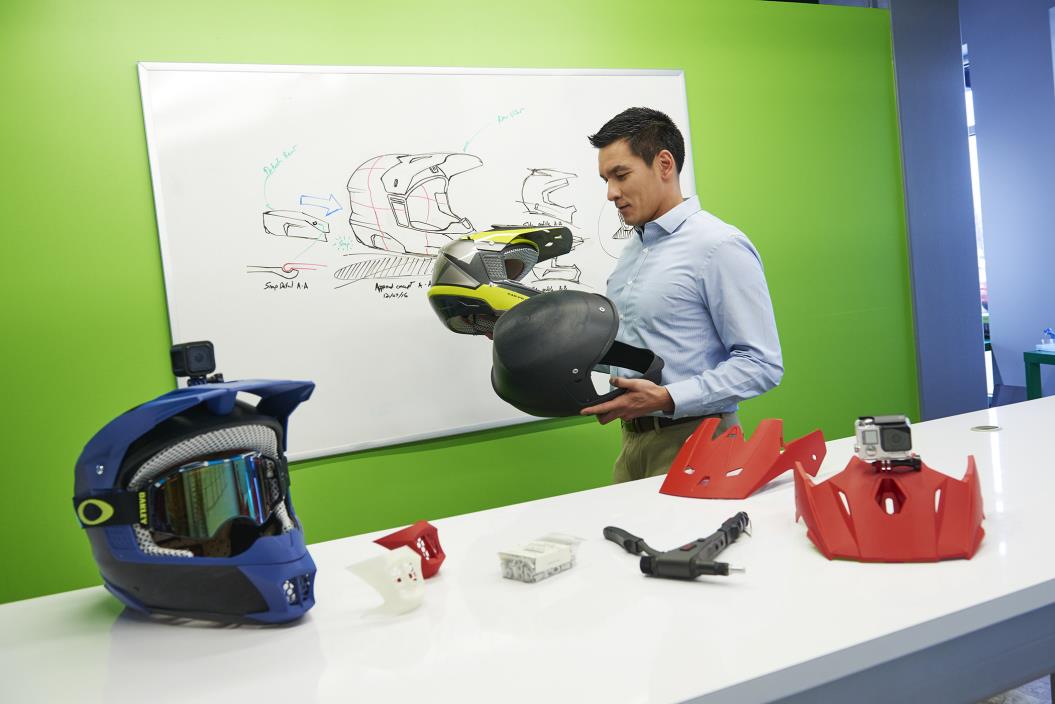
The developer of additive manufacturing technology owes this position to continuous innovation. A significant part of the 2,000 employees is involved in research and development on a daily basis; a global network of Stratasys partners guarantees direct customer support.
The aviation, automotive, consumer products and general manufacturing industries, as well as healthcare and dental industries, are the core markets. The AM leader also supplies suitable solutions for 3D printing of prototypes, tools, models and increasingly end products, up to and including certified parts for aircraft, outside these sectors. Stratasys owns more than 1,600 patents in the field of 3D printing. Sales in 2020 amounted to more than $520 million.
From toys to high-quality industrial parts
In 1992, Stratasys sold the first FDM printer, the 3D Modeler. In 2007, 44% of all 3D printers in the world came from Stratasys. This success was partly due to the fact that the parts printed with the Stratasys 3D printer were stronger than those of the direct competitors. Even then, Ultem allowed printing chemically resistant parts. This distinguished Stratasys from other pioneers, such as 3D Systems Stereolithography (SLA) had developed and EOS that printed with Selective Laser Sintering PA11.

Over the past ten years, Stratasys has continuously broadened its portfolio, partly through acquisitions, partly through its own R&D. The first step was taken in 2011 with the acquisition of Solidscape, which had developed a wax printer. A year later, 20212, the merger with Objet Geometry followed. Objet's professional 3D printers use polyjet technology, comparable to a 2D inkjet printer. In 2013, Stratasys bought Makerbot, the pioneer in the field of desktop printers who developed very affordable filament printers after the first FDM patents expired. And in 2014, the 3D printer manufacturer announced the acquisition of GrabCAD. This brought in the software to streamline 3D printing processes, the third building block of the AM ecosystem.
The STEP printing technology developed by Stratasys – now in the joint venture Evolve – provides a technology for mass production using additive manufacturing. The two most recent acquisitions are those of Origin and RPS Neo. Origin is an American startup that develops fast and accurate DLP technology for printing precision parts with resin; RPS Neo is a British manufacturer of large format SLA printers.
Own material development
Stratasys develops the materials for the different types of 3D printers itself. This allows for optimal coordination between material and 3D printer. This lowers the threshold for starting industrial 3D printing, because customers purchase a ready-to-use concept. At the same time, this guarantees the best quality, whether it is a prototype or a machine part made of carbon fiber filled ABS or Nylon. For high-quality applications in the aviation and petrochemical industries, Stratasys supplies certified materials, such as Ultem, that meet international standards.
Stratasys 3D printers: a solution for every application
Stratasys has a wide range of both 3D printing technologies and 3D printers. With the appropriate plastic materials, a suitable solution is available for every AM application, also in terms of budget.
FDM printers
The FDM printers still form an important part of the portfolio. Stratasys is building two product lines for filament printing.
The F123 series is a line of desktop 3D printers, suitable for printing rapid prototypes as well as for the production of tools and smaller series of end parts. Despite being a desktop 3D printer, it can print carbon fiber reinforced ABS. Flexible materials are also available for this line.
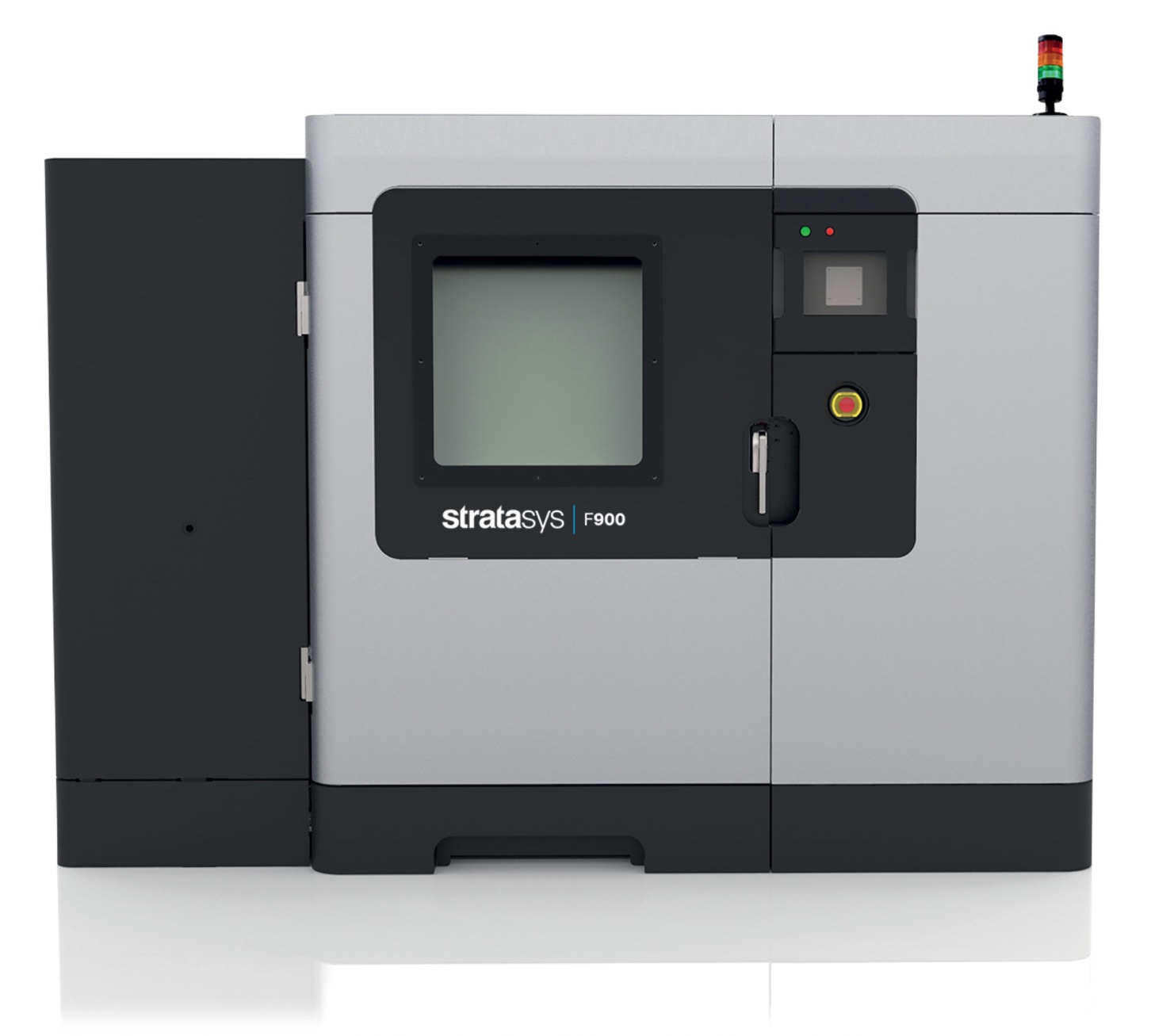
The Fortune series is the range of industrial FDM printers, developed for the production of high-quality plastic parts. The difference between the F123 series and the Fortus 3D printers lies in, among other things, the maximum construction volume, the printing speed, the accuracy and the suitable materials. The Fortus series is the workhorse of the FDM printer line. Both top models 3D print with Ultem 1010 and Ultem 9085, two of Stratasys' own materials. Ultem 1010 is certified for food safety, while Ultem 9085 is certified for applications in transportation equipment such as aircraft, public transport and vehicles. Airbus recently extended the certification of the Fortus 3D printer with Ultem for the production of aircraft parts.
PolyJet technology

The PolyJet technology is ideally suited for 3D printing of highly accurate parts with a smooth finish and a high degree of detail. PolyJet owes the detailing to 3D printing with a liquid polymer. Microscopically small droplets are positioned precisely on the workpiece. The part is built up layer by layer (0.014 mm thick). Stratasys applies this technology in such a way that multiple materials can be combined in one print, e. g. Rubber-like parts combined with ABS in functional prototypes ; full color with very transparent materials for, for example, medical models or lifelike models of consumer products. The high level of detail makes this 3D printing technique also suitable for 3D printing assembly and clamping tools.
Stratasys builds three product lines for PolyJet technology:
Objet 3D printers : with the different materials, engineers quickly 3D print their detailed prototypes, possibly with multiple material properties combined in one print. A biocompatible material is available for medical device prototypes. A special dental version is also available.
Connex 3D printers : this line of 3D printers uses triple-jetting technology. This combines up to three different materials in one workpiece. These can be flexible materials. The Connex 3D printers are also suitable for the production of tooling, including small injection molds for trial series and validation because the prints have a very smooth surface.
J series : the Stratasys J series is the top line for PolyJet 3D printing technology. These 3D printers process up to eight different materials at once. For realistic prototypes of consumer products and medical models, for example, we print with the J-series Pantone certified colors. Up to more than half a million color combinations are possible. Thanks to the integration with Stratasys GrabCAD, 3D full color printing is easy. There is a special version for dental applications, the J5 DentaJet. Dental labs can use this to print up to five materials in one go. By combining different products in one build job, the labs increase their efficiency.
Stereolithography
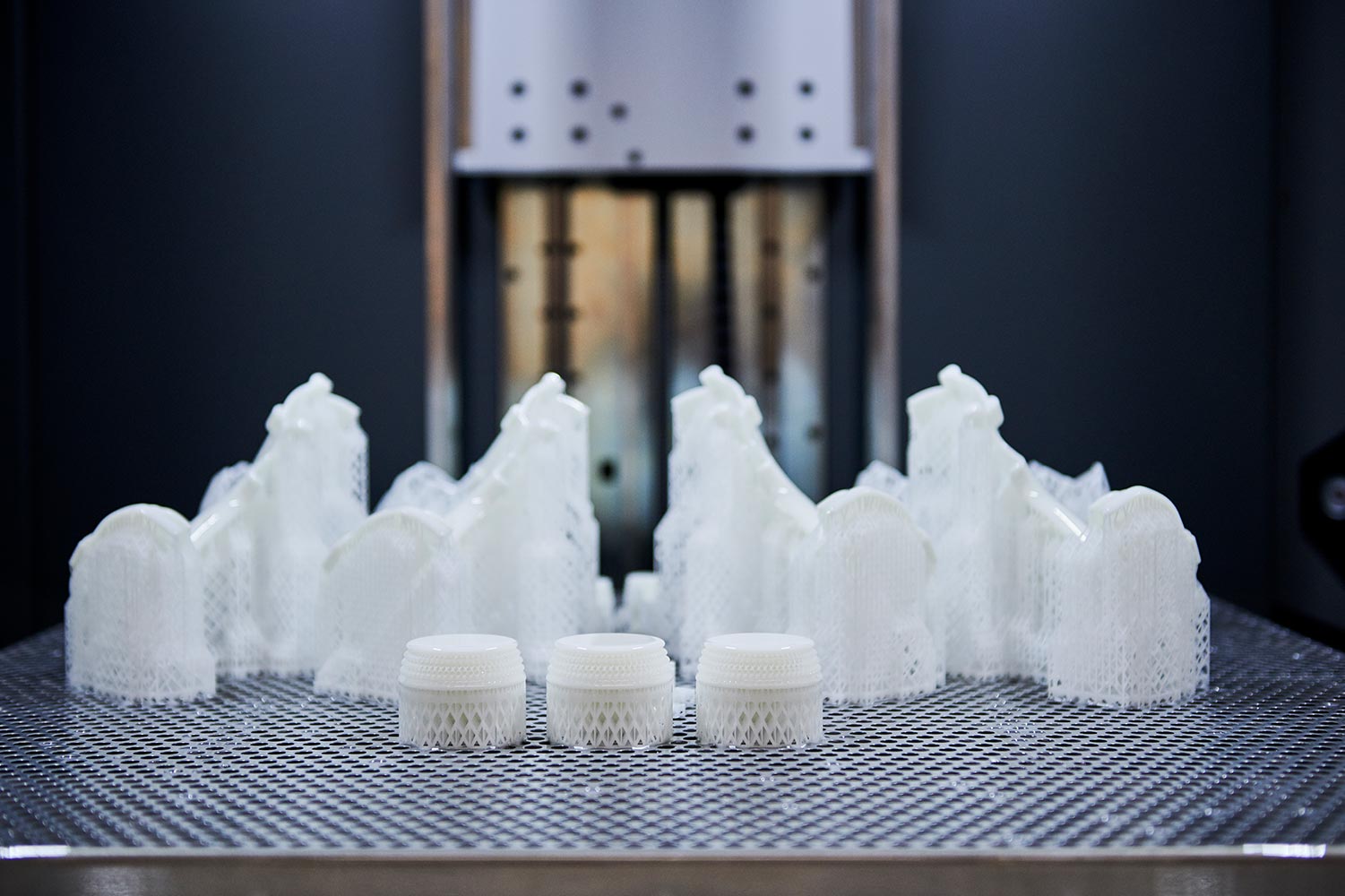
Stereolithography (SLA), like FDM, is one of the longest existing 3D printing techniques. A liquid resin containing photopolymers is exposed and hardened and the product is built up layer by layer. SLA prints are accurate, the minimum layer thickness is 0.1 mm. This guarantees a high degree of detail. It is also a fast 3D printing technology.
Stratasys V650 Flex : Stratasys builds this open source SLA printer for industrial applications. The build volume of 508 by 584 by 508 mm offers the possibility to 3D print a large number of smaller products in one build job. With the V650 Flex, open source means that the user has access to all parameter settings and is free to choose which materials to print with. Stratasys also offers a number of resins together with DSM Somos, including the validated settings for the V650 Flex.
RPS Neo : With the acquisition of the British company, Stratasys has added a large format SLA printer to its line of SLA printers. This technology prints accurately, but is less suitable for 3D printing of larger products. That is possible with the RPS Neo800. This allows you to print detailed products up to 800 by 800 by 600 mm. Stratasys uses the same open source strategy as with the V650 Flex: third-party resins can also be processed.
Origin : From mid-2021, Stratasys partners such as SEIDO Systems will start selling the Origin 3D printers. Stratasys acquired this 3D printer manufacturer at the end of 2020. Origin has developed its own printing technology based on photopolymerization, the P3 technology (Programmable PhotoPolymerization). Origin's software developers have succeeded in building a closed loop system in which the printer settings are continuously adjusted based on sensor data. This allows you to print even faster and more accurately, even larger workpieces. Applications include tooling, such as injection molds, as well as end parts and series production of consumer products, for example for the shoe industry.
Stratasys in the Benelux: SEIDO Systems makes the difference
Stratasys supplied the first 3D printers in the Benelux at the end of the last century. Since 2008, SEIDO Systems has been the Benelux reseller for the 3D printer manufacturer. The Flemish company has been the exclusive Stratasys partner in the Benelux for several years.
SEIDO Systems is also a partner for Stratasys customers. It is precisely with the support that the authorized reseller offers that the SEIDO Systems team makes the difference. 3D printing is a versatile manufacturing technology. The variation in 3D printing techniques and the amount of different materials prove this. That is why it is so important to first look at the application to look at the future plans for this and then look for the most suitable solution. SEIDO Systems' account managers support customers, often based on their own engineering background, always based on the expertise they have about 3D printing in the broad sense of the word and Stratasys technology in particular.
After-sales support
SEIDO Systems supplies professional and industrial 3D printing and additive manufacturing solutions. In addition to the most suitable technology, this naturally includes service. The design engineer who 3D prints his prototypes on a Stratasys F123 printer; the machine builder who prints parts for his machines on a Fortus model or the medical specialist who plans an operation and uses a detailed full-color model, they all rely on their 3D printer. Stratasys develops and builds the printers based on the vision that they must be robust and reliable with little chance of malfunctions and require little maintenance. The SEIDO Systems team ensures that downtime due to malfunctions or maintenance is minimal. In addition, the Benelux partner has its own printing capacity in emergency situations, which is available to customers in such situations.

Over 20 years of experience
Experience, expertise, and customer satisfaction are the cornerstones of our company.

Authorized distributor
Your AM partner in the Benelux, France, and the Nordics, with service operations and local offices in each region.

Go for the best deal
We offer a range of financing options to suit every use case, including renting, leasing, and trade-in solutions.