






Sixties supercars are revived thanks to Stratasys printing technology
Rebuilding two replicas of a 1960s supercar costs money and time. With 3D printing it is faster and cheaper, because no tools are needed, for example. That's why Radford Studio, Aria Group's automotive design and engineering firm, decided to 3D print more than 500 parts for the Lotus 62-2 replicas. This ultimately produces even better sports cars than their original.
“By integrating 3D printing technology, Radford has been able to bring the 1960s-style supercar into the 21st century with the high-end, hyper-custom style and features their customers expect in a vehicle of this caliber,” said Pat Carey, Senior Vice President, Strategic Growth at Stratasys.
Stratasys 3D prints more than 500 parts for Lotus 62-2 replicas
More than twenty 3D printers
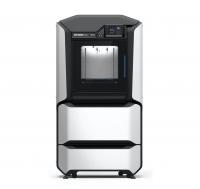
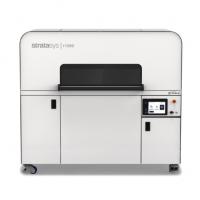
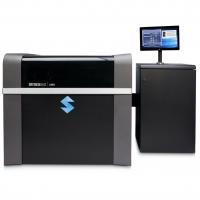
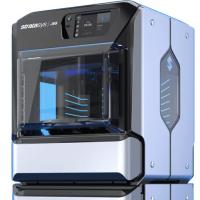
Stratasys Direct Manufacturing worked with the American design studio to ultimately 3D print more than 500 parts for both Lotus 6202 replicas. Stratasys' entire arsenal of 3D printing techniques has been used for this, from the F770 and F900 FDM printers to the J55 for full color parts, which are directly built-in. All together, more than twenty different 3D printers were used.

The entire dashboard printed in one go
Carbon fibers
The production of the chassis is a feat. For this purpose, the sandwich core was printed in two on the Stratasys F900. The ultra-strong Ultem 1010 was used as material. The two halves are glued together and the whole is then wrapped with carbon fiber. This gives the light chassis the strength and stiffness that the supercar needs. Many mounting brackets are printed directly with Nylon12 Carbon Fiber, a fiber-reinforced plastic for Stratasys FDM printers. This material is stronger than aluminum and weighs much less, ideal for automotive applications

Not all Stratasys 3D printers were present on location at Radford Studio. The other print jobs are distributed to printers at other locations via GrabCAD Studio.
Control via GrabCAD cloud software
Because Stratasys 3D printers were available in multiple locations, the Radford team used GrabCAD Shop cloud software to digitally control and coordinate the entire workflow. Thanks to this software platform, the entire process can be controlled from one point, regardless of where the printers are located. All communication is done in a secure manner. This means that IP remains within the design studio.
On Discovery+ you will find a documentary about how Radford Studio develops and produces replicas of the Lotus 62-2 using 3D printing technology.

Over 20 years of experience
Experience, expertise, and customer satisfaction are the cornerstones of our company.

Authorized distributor
Your AM partner in the Benelux, France, and the Nordics, with service operations and local offices in each region.

Go for the best deal
We offer a range of financing options to suit every use case, including renting, leasing, and trade-in solutions.