






Terry Wohlers: no hype, but reality
Ten years ago, in 2012 and 2013, 3D printing was all the rage. Now the technology is once again in the spotlight. But there is absolutely no hype, says Terry Wohlers, the American AM expert, who has been mapping the sector annually for 26 years in a row in his Wohlers Report. “The hype was at the time, now we see the reality.”
And the reality is that additive manufacturing will be worth around $115 billion by 2030, eight times as much as in 2021.
“And then we are fairly conservative and cautious,” as Terry Wohler recently put it in a webinar. "The multiplier effect is getting bigger and bigger." He and his research team expect an average growth of 26 percent per year in the rest of this decade. “And then we'll break the $100 billion mark in the next 8 to 9 years.”
Companies are starting to scale up
Terry Wohlers sees both on the 3D printer side plastics as on the side of 3D metal printing grow. “Some sectors are scaling up their AM production, for example through post-processing automation and through the MES systems that help with quoting and capacity planning.”
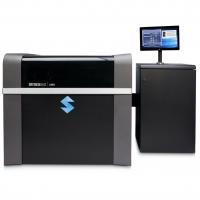
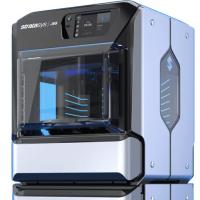
Stratasys is one of the companies that realize that the path to large-scale industrial production with 3D printing partly runs via MES platforms. The new GrabCAD AM platform which was launched on Formnext is an example of this.
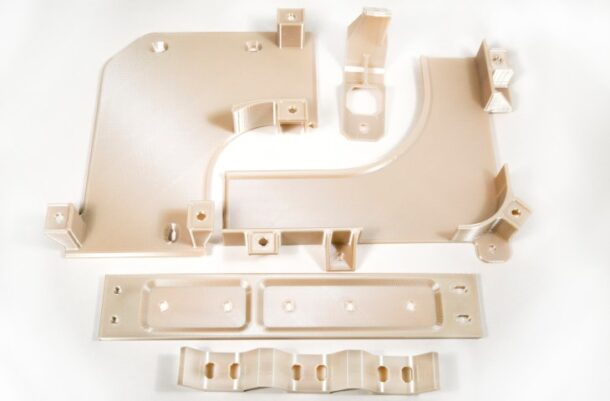
3D printing with polymers has already been accepted as a production technology for end products in a number of applications. Shorter supply chains are one of the real advantages. An example is the use of the Stratasys Fortus 3D printers for aircraft parts.
Engineering students still need to learn more about how to reduce parts with 3D printing and optimize weight
Lack of design knowledge slows you down
Despite his optimism about further growth Terry Wohlers also some critical comments. He sees the lack of specific design knowledge for additive manufacturing as an obstacle. "The biggest opportunity lies in the design for additive manufacturing. Barely 1 percent of engineers know what additive manufacturing means. That is the real problem." Because this means that opportunities to integrate multiple parts into one model and 3D print it, for example, remain unused. Many universities and colleges are working on integrating design for AM into their curricula. Courses where students really learn how to consolidate parts and implement topology optimization with additive manufacturing are the exception rather than the rule.
Even more applications
The AM guru, who will release the new edition of Wohlers Report in the spring of 2022, expects that there will be many more applications of 3D printing than we currently know. For example, 3D printing of personalized medicines. He also sees growth in 3D printing of tooling that is used in other production techniques.

Over 20 years of experience
Experience, expertise, and customer satisfaction are the cornerstones of our company.

Authorized distributor
Your AM partner in the Benelux, France, and the Nordics, with service operations and local offices in each region.

Go for the best deal
We offer a range of financing options to suit every use case, including renting, leasing, and trade-in solutions.