






3 prejudices about 3D printing debunked
3D printing is expensive, slow and the quality is not comparable to an injection molded part or a CNC milled part. Justified criticism? Or are those making these arguments against 3D printing missing something?
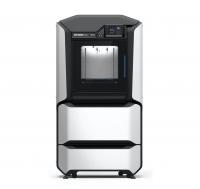
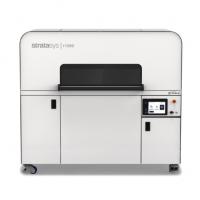
Anyone who wants to see the construction of a 3D printed workpiece will have to be patient. Because admittedly, it can sometimes take a long time before all layers of material have been printed and the workpiece can be removed from the 3D printer. This does not always have to be the case. A prototype printed on a Stratasys F370 FDM printer will usually be ready the next day. That's the difference between industrial and desktop FDM printers. And with the new Origin One , the first DLP 3D printer from Stratasys with P3 technology (Programmeable PhotoPolymerization), 3D printing of multiple end parts is much faster and at a higher resolution.
If you calculate the real TCO, 3D printing can be surprisingly cheaper than classic production techniques
Faster then
But even this 3D printer for end applications cannot compete with simple workpieces against the CNC milling machine that mills aluminum, for example. Let alone the extremely short cycle times of an injection molding machine. Yet 3D printing is a faster production technique for many applications, both compared to CNC milling and injection molding. This has everything to do with the fact that 3D printing does not require any tools. For injection molding this means no mold; for CNC milling no clamping, the correct milling tools, cooling lubricant, etc.

Molds and fixtures are very suitable for 3D printing, especially because of the short production time. Today an idea for a clamping device, testing tomorrow morning.
How long is the lead time?
If one measures the total lead time in traditional production, it is often much longer than the time required by an industrial 3D printer. Especially if only one or a few pieces are needed. And if, for example, you need ten or perhaps a hundred products, the Origin One can combine these products in one build job, provided that the dimensions allow this within the construction volume of this fast DLP printer. What is not yet taken into account is that with 3D printing you can combine multiple parts in one print piece, which in turn saves assembly time and costs.
Not more expensive then
Certainly: a 3D printer cannot compete with the cost price of mass production with an injection molding machine. But before tens of thousands of plastic parts come out of the injection molding machine, you must first invest in a mold. Depending on the complexity, making this can easily take eight to twelve weeks and cost thousands to tens of thousands of euros. Especially for smaller quantities, 3D printing can be cheaper down the line. With this technology it is always good to calculate the Total Cost of Ownership (TCO). With the industrial one Stratasys Fortus 450mc 3D printer can be used with technical plastics such as Ultem or carbon filled Nylon 3D printing. These materials have such good properties that they are suitable for machine parts that are, for example, milled or cast from aluminum. Suppliers often use minimum order quantities because otherwise the setup costs of the machine become too high. With Stratasys' industrial 3D printers you can print the parts you need later this week overnight. So no more stock costs, no purchasing costs, no costs for entry checks. Let alone the wasted costs on injection molded parts that ultimately have to be destroyed because the design has been changed. But the injection molding company simply has a minimum order quantity of several thousand pieces. Can we make a realistic TCO calculation?

A robot arm printed with Ultem. Because a robot arm is often customer-specific, 3D printing is an ideal production technology because no tools are required.
Boeing puts Stratasys filament on the QPL list for MRO companies
The quality, more than good
Aircraft manufacturer Boeing has Antero 800NA , a PEKK-based high temperature material, approved and added to the Qualified Products List. This is the first time that Boeing has qualified a Stratasys material for applications that require additional chemical resistance or high fatigue requirements. In addition to the Antero 800NA, the 800CN03 variant is also permitted. This is an electrostatic material. This means that Boeing is happy if MRO companies for aircraft maintenance can now 3D print these parts on the Fortus F900 and Fortus 450mc printers. The Antero filaments are also good for many other applications, for example in the process industry or the machine industry. It is important that in addition to the correct application, the design is also adapted for 3D printing to further boost the performance of the parts or improve printability.
so is 3D printing expensive, slow and of poor quality? No. But it does require you to look and calculate slightly differently. The help there account managers from Seido Systems happy to assist you.

Over 20 years of experience
Experience, expertise, and customer satisfaction are the cornerstones of our company.

Authorized distributor
Your AM partner in the Benelux, France, and the Nordics, with service operations and local offices in each region.

Go for the best deal
We offer a range of financing options to suit every use case, including renting, leasing, and trade-in solutions.