






Three reasons to 3D print tooling
Stratasys automates design, reduces costs and has special materials for tooling
Jigs and fixtures are indispensable in many manufacturing companies. Companies often mill them from aluminum. However, 3D printing of tooling is in many cases a better alternative, especially now that manufacturing companies are busy again. 3 reasons why 3D printing of molds and fixtures can be interesting.
Reason 1: More yield, lower costs
The order books of many machining companies are well filled again. Customers sound the alarm to bring forward deliveries. Anyone who has their CNC milling machines full of work for customers should not even consider using the milling machine to mill tools for their own use. Every hour that the machine mills tooling is an hour that cannot be invoiced. In addition, the operator is busy clamping material, setting up the machine and other preparations. That time could be better spent on a customer order. This immediately generates turnover. The work preparation for a print job is done almost entirely offline, for example with the GrabCAD Print software. That takes less time. In addition, the cost of printing a mold is usually much lower than milling the same part.

Bee Caterpillar the drill collet is sometimes damaged when changing tools. The delivery time of a new copy is several weeks; producing internally costs $700 to $1,000 and three shifts of production loss. Caterpillar is now 3D printing temporary collets for $150 each so that production doesn't stop while waiting for a new collet to be delivered.
Reason 2: Shorter lead time
It 3D printing of assembly and production tools is happening quickly. Depending on the size, most tools will be ready within a day. The lead time can be even shorter because Stratasys together with nTopology makes designing tools easier. The FDM Fixture Generator allows you to automate the tool design process. No more CAD work is required. All the engineer has to do is drag the 3D model onto the worksheet of the FDM Fixture Generator and specify the outer dimensions of the mold, interfaces with the product and supports for stabilization. The rest of the design is then automatically generated, ready for 3D printing.

Reason 3: Suitable materials
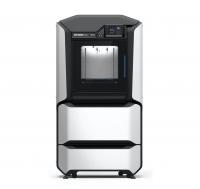
Nowadays there are materials for FDM printers that are very suitable for tools. This already applies to the entry-level industrial FDM printers, such as the Stratasys F123 series. For this ABS CF10, ABS reinforced with carbon fibres, suitable for 3D printing of tools. The material is strong (maximum tensile strength 37.7 MPa), stiff and weighs less than aluminum, for example. The industrial FDM printers from Stratasys' Fortus line can print with Nylon 12CF , a Nylon 12 material filled with short carbon fibers. This material has a tensile strength of 76 MPa, but weighs only half as much as aluminum. For applications where the tensile strength is high enough, 3D printing not only saves lead time and costs, but also makes tools even more ergonomic because they are lighter. In assembly, this can be an additional reason to 3D print.
If you want to know more about 3D printing of tooling, you can contact Seido-Systems advisors.

Over 20 years of experience
Experience, expertise, and customer satisfaction are the cornerstones of our company.

Authorized distributor
Your AM partner in the Benelux, France, and the Nordics, with service operations and local offices in each region.

Go for the best deal
We offer a range of financing options to suit every use case, including renting, leasing, and trade-in solutions.