


Customer stories - ARaymond
Customer story
ARaymond: 3D printed mold inserts for functional prototypes
ARaymond and IPC, France
When you develop injection-molded parts, it is hard to validate a design in the final production material before you invest in costly production tooling.
ARaymond, a global leader in automotive fasteners, assembly solutions and quick connectors, found a faster way with IPC: 3D printed polymer mold inserts.
IPC is France’s technical center for plastics and composites. With its experts and nationwide network, IPC supports industrial companies, from studies and test protocols to feasibility and technology transfer.
In France, SEIDO Systèmes is a Platinum reseller of Stratasys.
The challenge
ARaymond needed functional prototypes of a cable clip before moving on to tooling for high-volume production. Checking shape and fit was not enough. The clips had to be injection molded in the final material, so the team could evaluate the molded parts.
“The goal of the polymer tooling was to get a functional prototype in the final production material. Before moving forward with a very costly tool for large production volumes,” says Thomas Joffre, Deputy Director of Research at IPC.
Traditional machined prototype tooling takes weeks to produce and modify. That makes every design iteration slow and expensive.
In one week, we can already test different designs and different models, and find the design that works best.
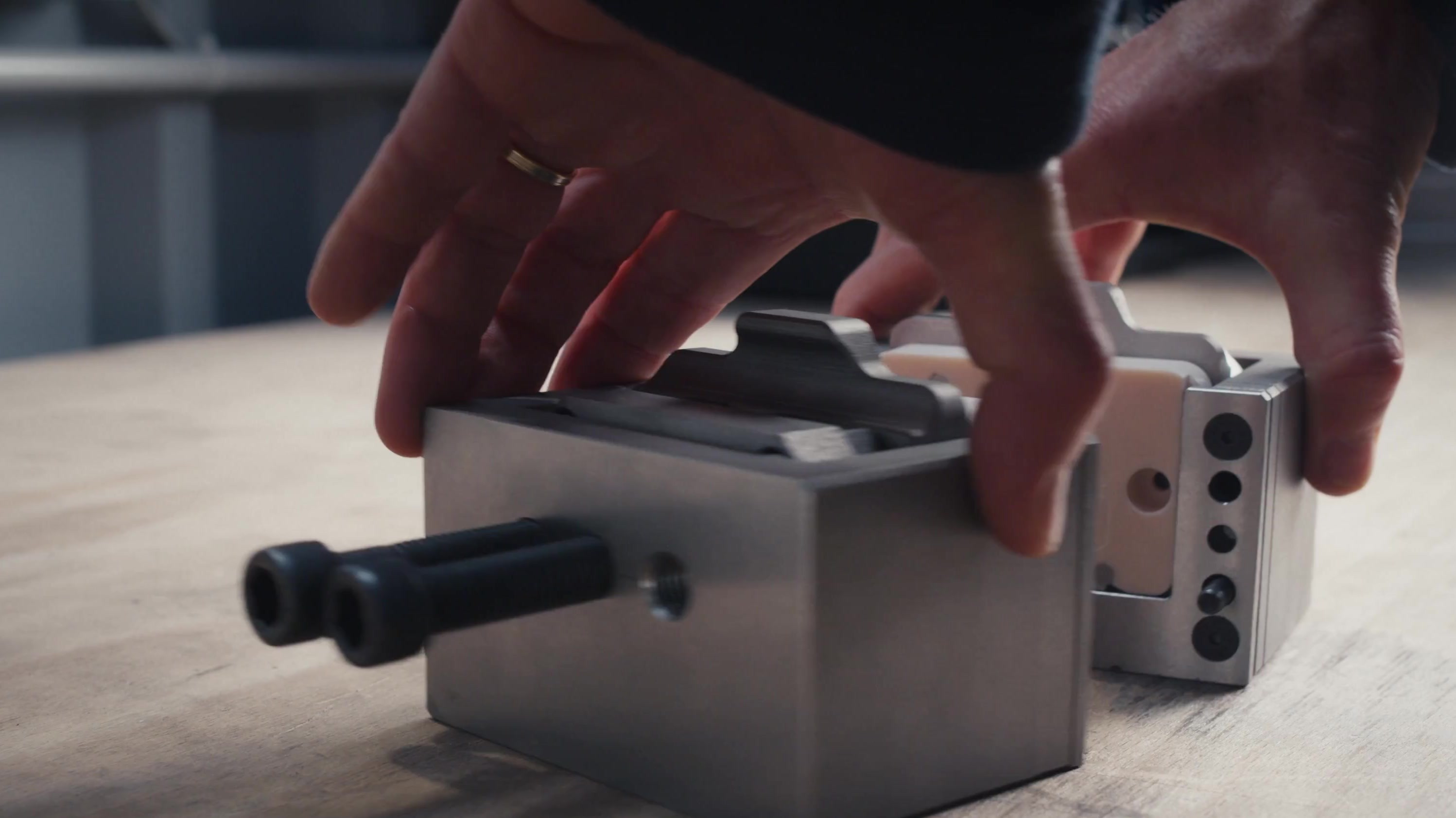
Origin Two and Ultracur3D RG 3280
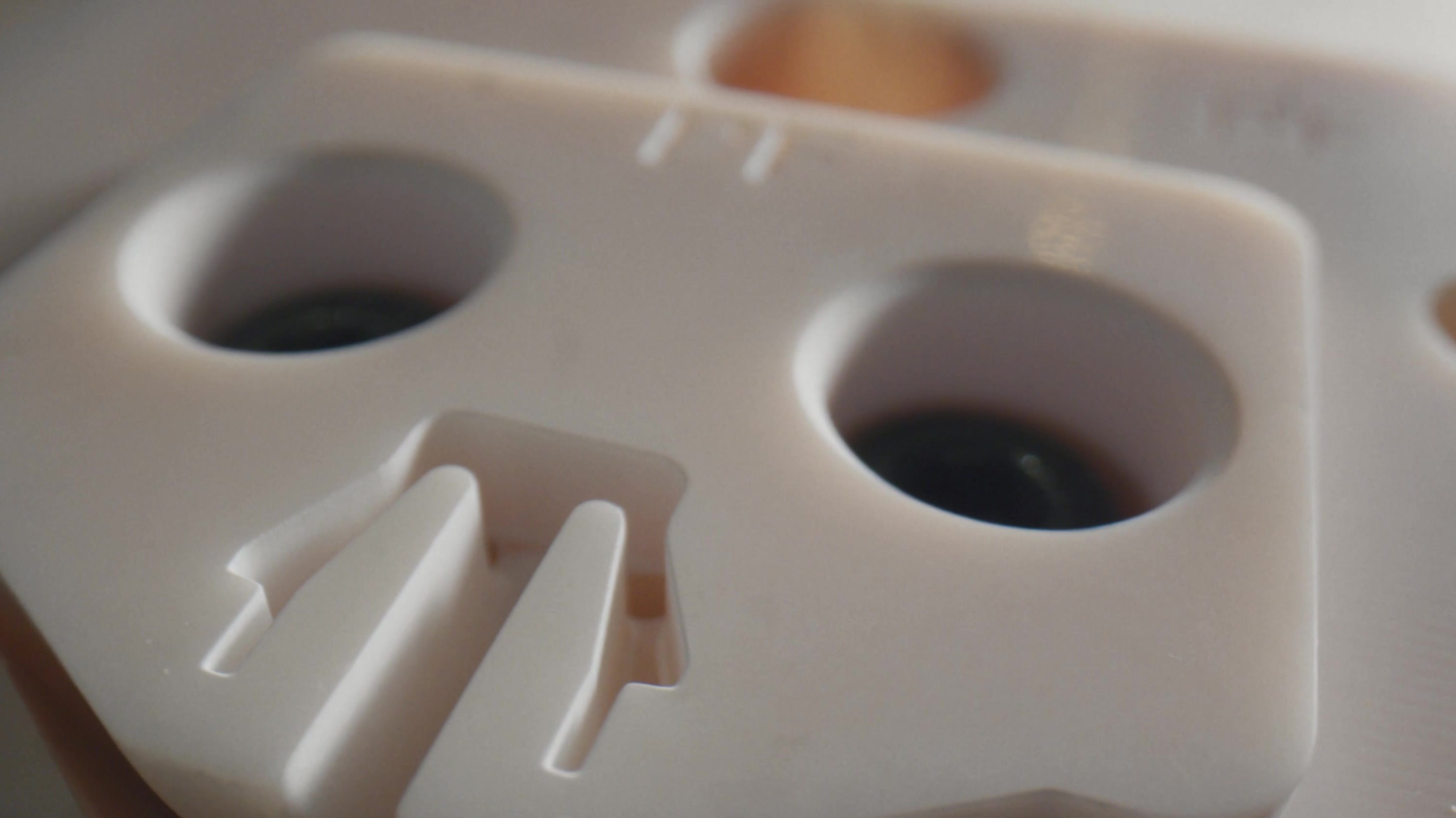
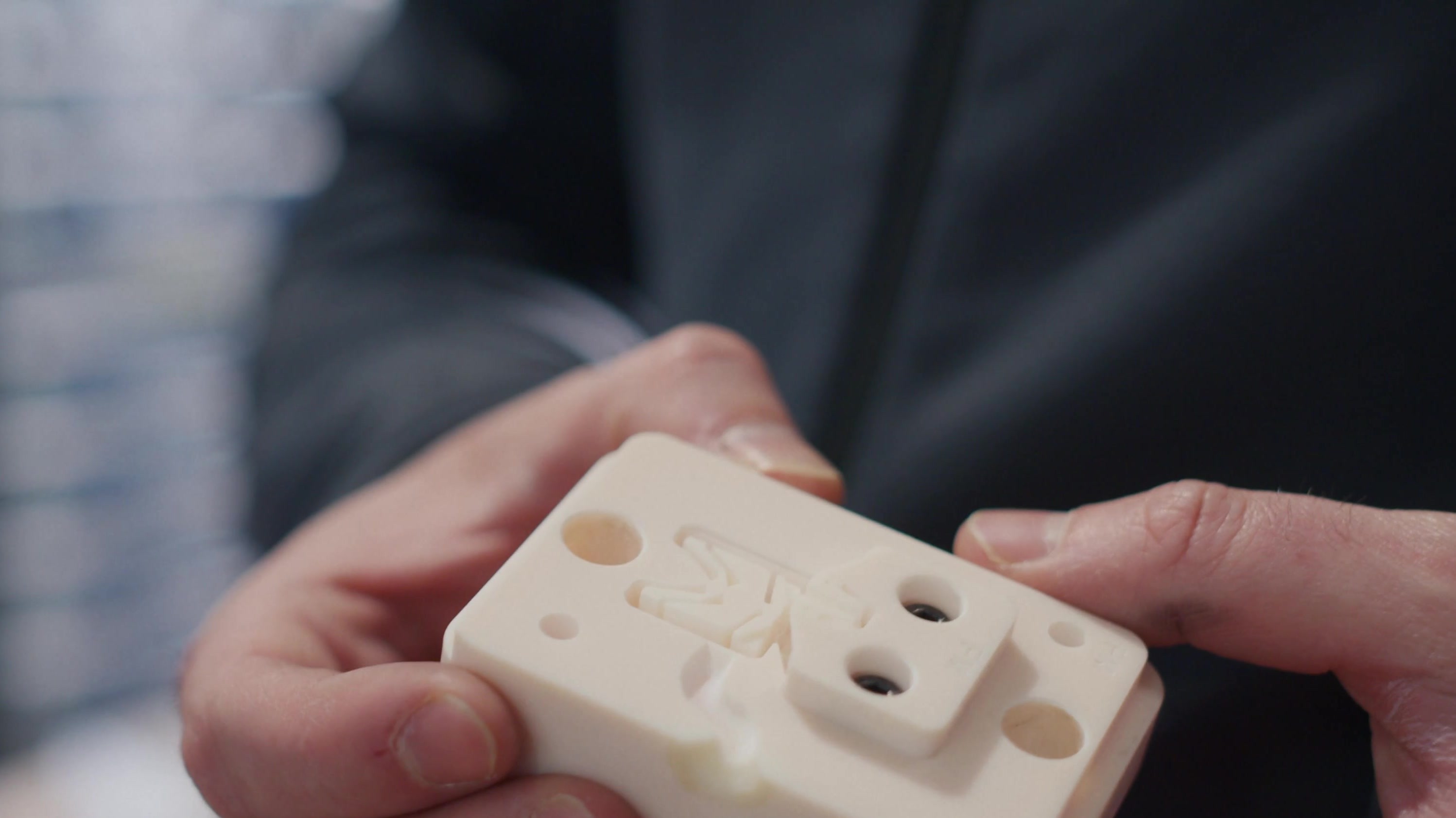
IPC developed the inserts with the Stratasys Origin Two workflow and Ultracur3D RG 3280 material. The demonstrator is a mold insert for cable clips, developed with IPC and ARaymond.
“The advantage of the Origin Two is that we can iterate in-house and produce polymer mold inserts in a few hours,” says Adrien Brunet, Application Engineer at Stratasys. “A metal mold is made with EDM, and each iteration takes several weeks. Here, we save a huge amount of time.”
From design file to molding press
Once the design file is ready, printing takes a few hours. For this insert, it took about two hours. Next come cleaning and UV post-curing.
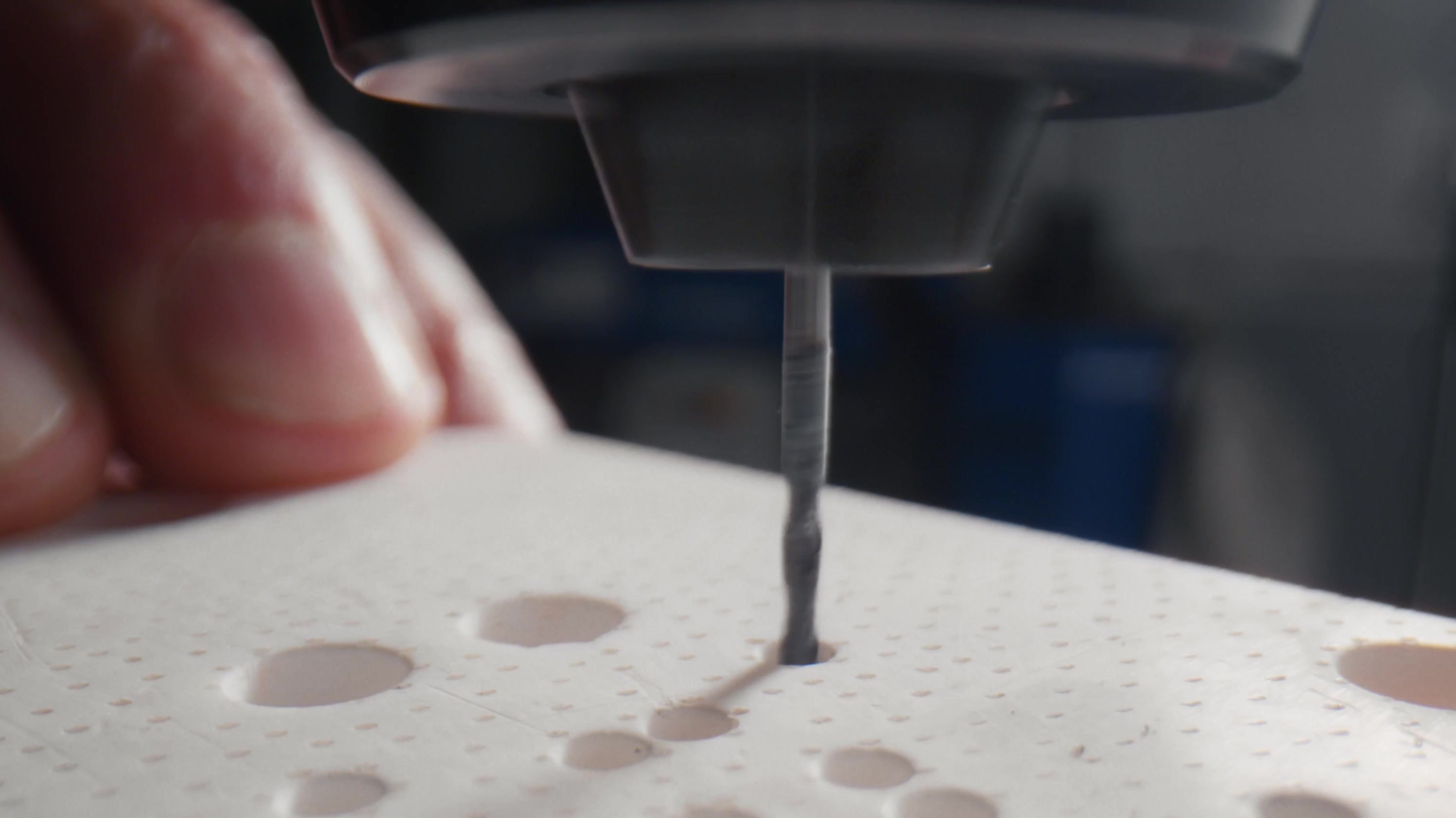
“We know we have an accuracy of 50 to 100 microns. So we leave one tenth of a millimeter of stock to machine back,” Adrien Brunet explains.
The team machines the rear face and the ejectors. Then the insert goes straight to the injection molding press.
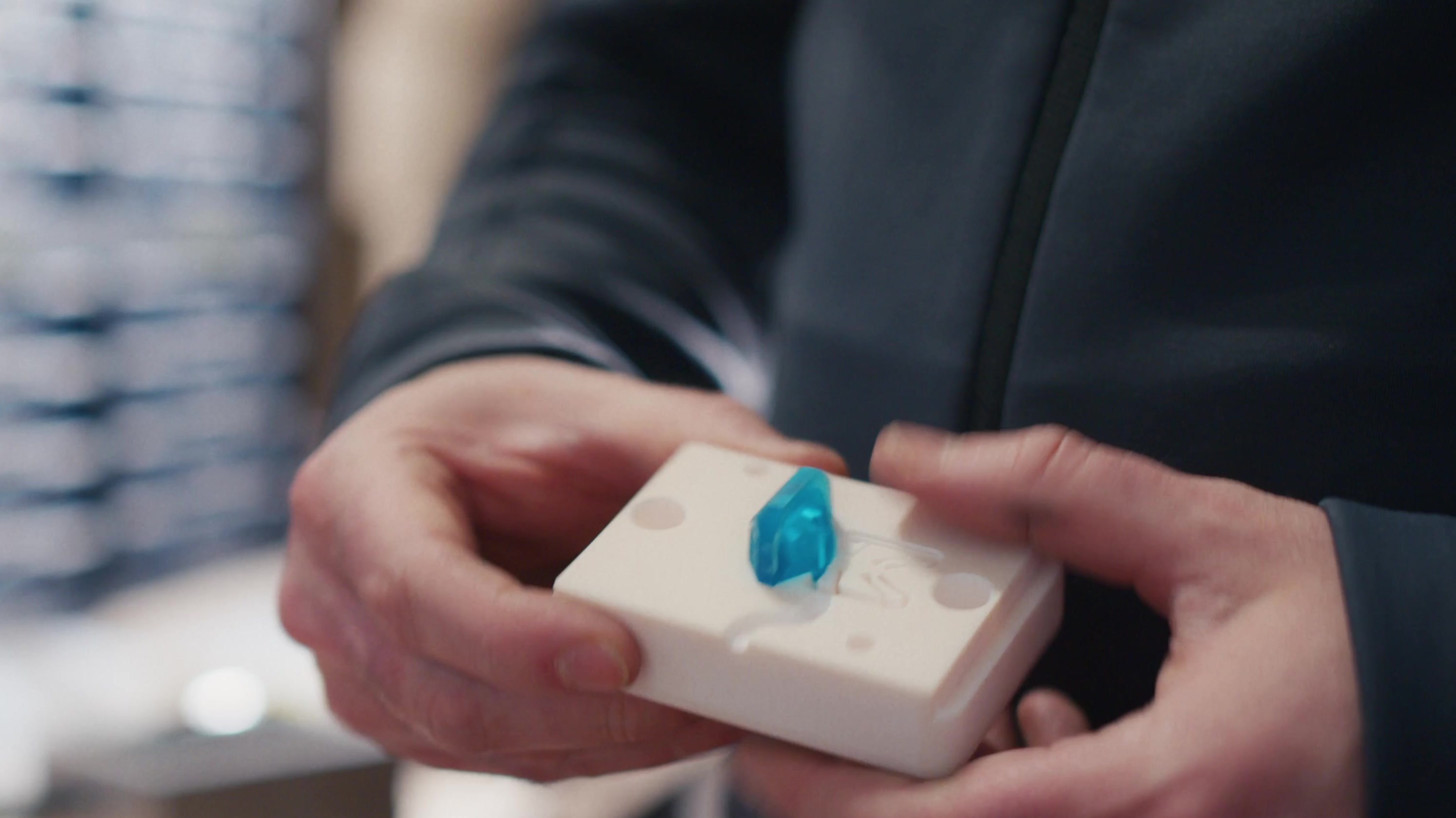
With these inserts, we make prototype parts in the final material, which we cannot produce with direct additive manufacturing. And we can also characterize the parts after molding.
Soluble resin for fragile features
This part is unusual: it has to be ejected from each side to remove it from the tooling. So IPC built a small fixture to eject the part on both sides, with an undercut released by a movement.
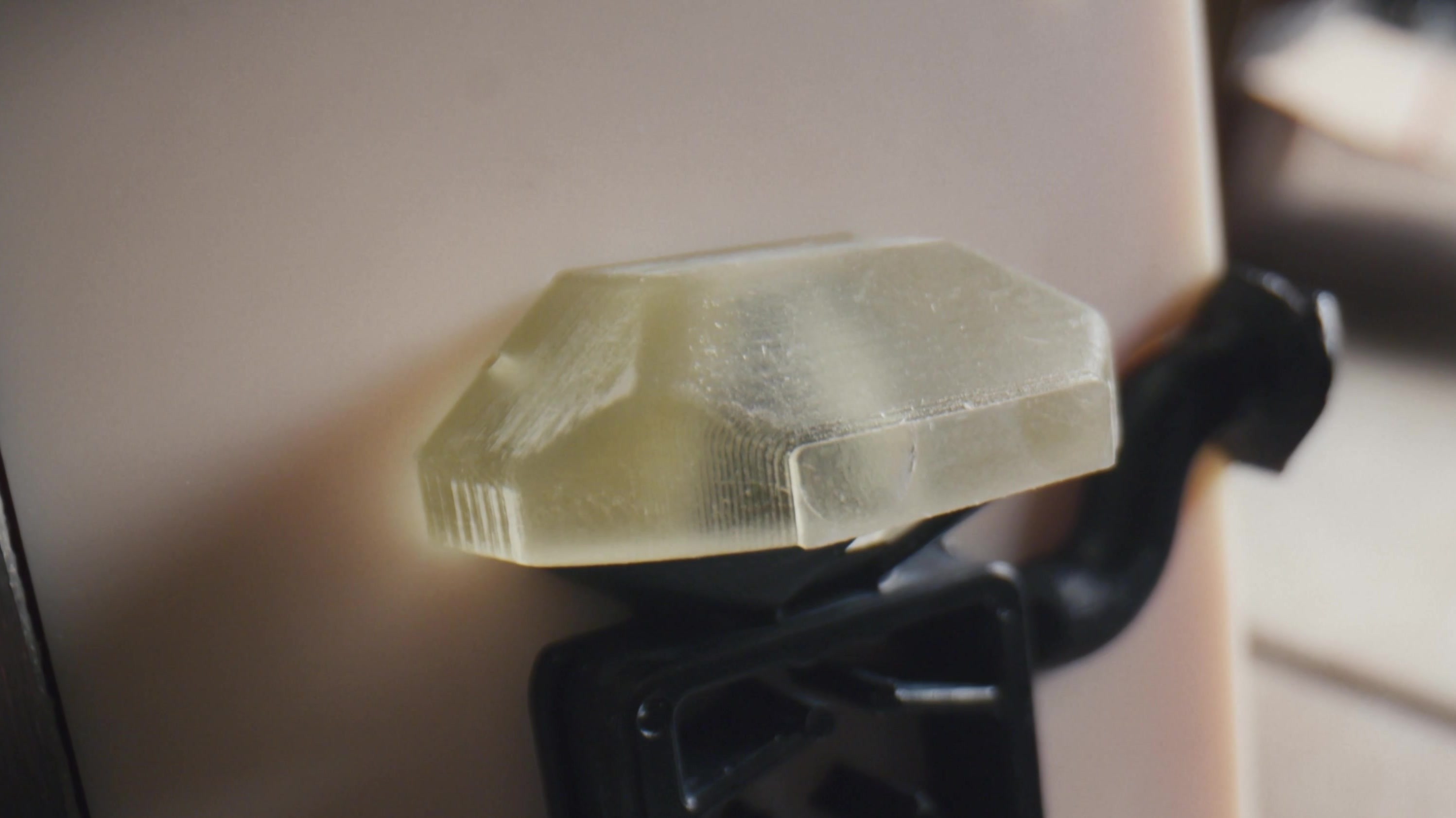
“The drawback of polymer inserts comes during ejection,” says Jean-Christophe Borneat, Additive Manufacturing Engineer at IPC. “The slightest stress on thin walls can damage the tooling. So we decided to demold these fragile areas using a soluble resin.”
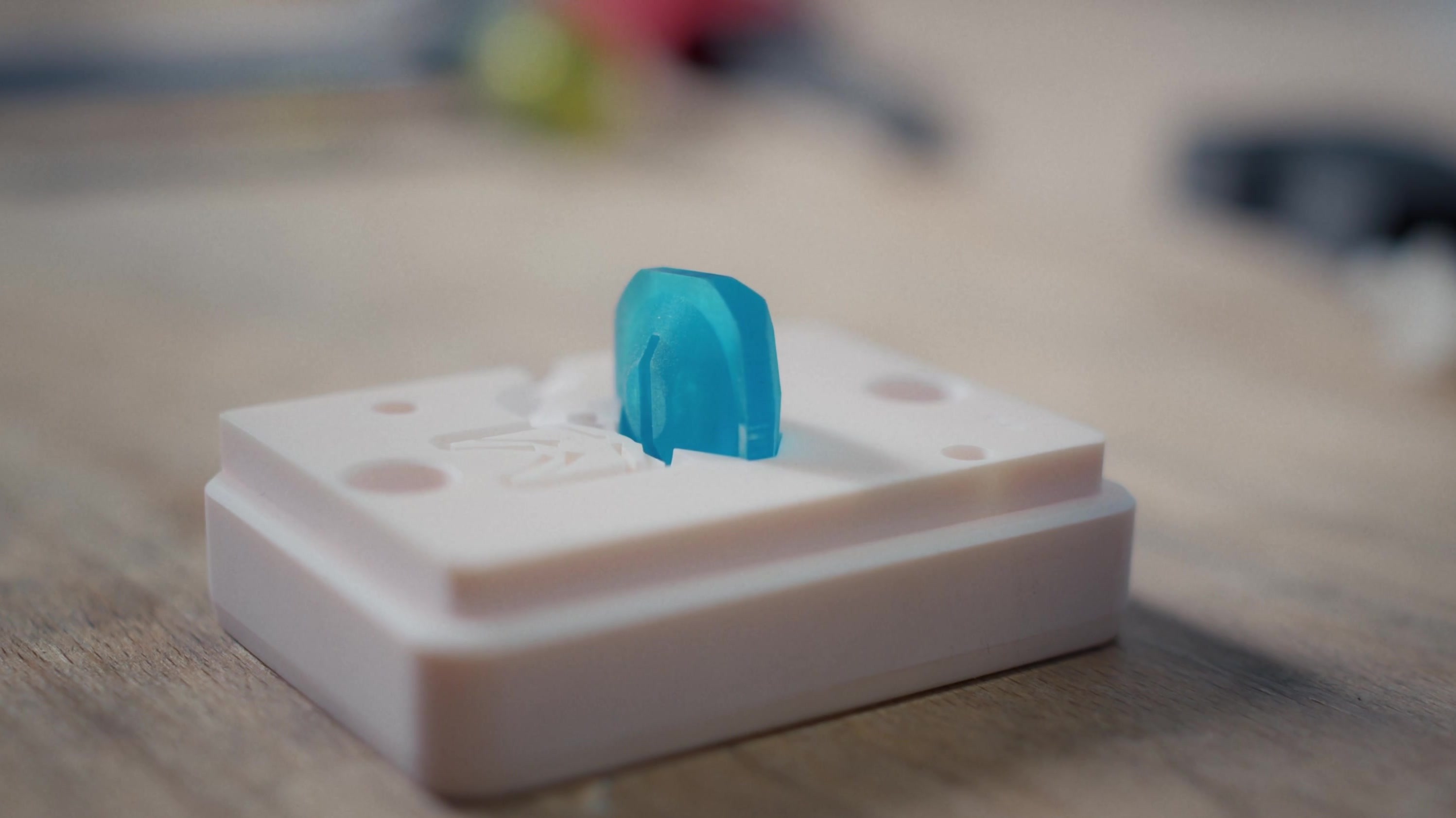
“During injection, part of the thermoplastic piece is fully enclosed in the soluble insert,” Adrien Brunet explains. “We dissolve it over 24 hours and recover the part in thermoplastic.”
The impact
- Functional prototypes in the final injection molding material
- Multiple designs tested within a week
- Iteration time cut from weeks to hours
- Parts validated before investing in production tooling
- Less reliance on subcontracting thanks to in-house additive manufacturing and molding
“This lets us use in-house resources, like a manual press and Origin machines, and cut subcontracting costs for producing a part,” Jean-Christophe Borneat concludes.
The project shows how additive manufacturing bridges the gap between design development and mass production.

Try it yourself
With the Origin Two, you print mold inserts in hours and test your design in the final material. We are happy to show you how it works for your parts.

With the Stratasys Origin, you produce ready-to-use end-use parts with quality and precision comparable to injection molding. Thanks to the high-performance resins, the printer is ideal for series production or on-demand production.
Stratasys Origin
Several purchase options or operational renting. Contact us for a flexible formula tailored to your company.