


3D Printed Soluble Cores Keep Porsche Purring

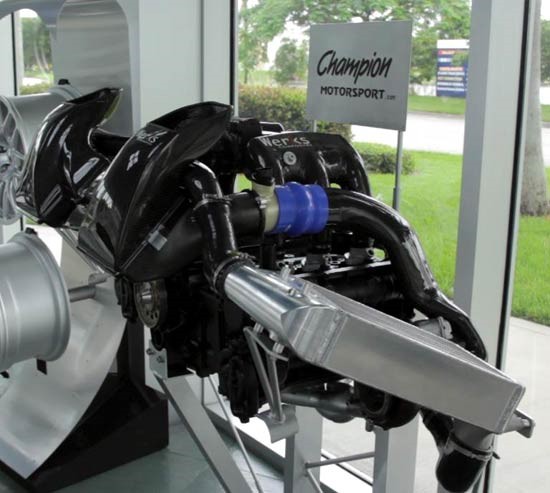
Champion Motorsport has built its reputation on impressive victories in auto racing. That same winning technology is now available in a line of aftermarket performance products for Porsche cars, including turbo inlet ducts for the Porsche 997, also known as the Porsche 911. Though traditional manufacturing would have forced a sacrifice of either airflow or aesthetics, Champion found it did not have to compromise on either when using 3D printed soluble molds.
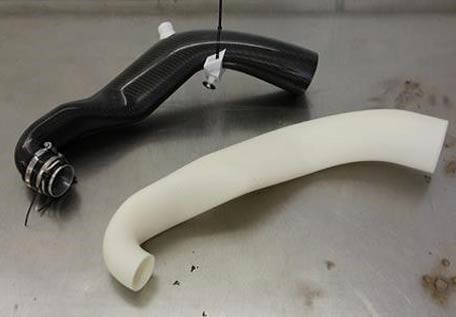
To optimize performance, Champion makes the inlet duct out of carbon fiber, a material that is strong, thin, and lightweight. These qualities make it possible to increase the duct’s interior dimensions while maintaining the outer dimension set by factory specifications. More interior space allows better airflow, which, in combination with the lighter weight, improves overall engine performance.
The challenge of being single
The problem was that conventional tooling methods could not produce a duct that was perfectly smooth on both the interior and exterior surface. A duct molded in two parts would have to be bonded, which would make it weaker than a duct made of a single piece. The only way to mold it in a single piece was to use a mold that could be removed from within the tube. However, a sacrificial sand core compromised the surface finish and could not deliver the consistency Champion sought.
Chris Lyew, lead mechanical engineer at Champion Motorsport, explained the dilemma the company faced: “The performance of the vehicle depends on a smooth internal surface while the customer expects a beautiful external surface.”
A core solution
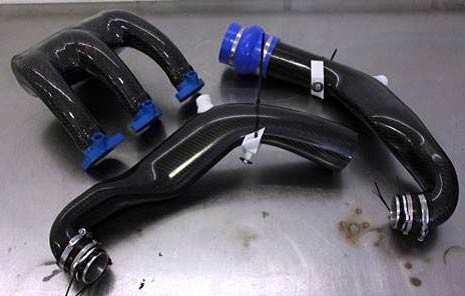
Champion Motorsport found the solution in the Fortus 3D Production System it had been using in the design process. The FDM-based 3D printer had served the company in creating functional prototypes for its designs. It now also took on the challenge of molding the carbon fiber by producing FDM soluble cores.
Champion explains how the Fortus takes a three-dimensional CAD design and then 3D prints a mold based on it. The mold can “be wrapped 360º in carbon, eliminating the need for any seams in the finished part.” A solution is applied to remove the mold and leave behind a perfectly smooth pipe. The one-piece construction delivers consistent quality for the high-performance turbo inlet ducts. 3D printing provides what Lyew calls “the magic recipe” for this soluble core production.
FDM soluble cores have also opened up new design possibilities for Champion. As Louis Malone, Technical Director at Champion Motorsport, puts it: “At the end of the day, the FDM technologies — they save us time; they save us money.”
Source: Stratasys. Photo: Stratasys.
Want to explore this application?
SEIDO Systems is Stratasys Platinum Partner across Benelux, France and the Nordics. Contact us for advice, a demo or a test print.