


The 4 Best Welding Fixture Applications for 3D Printing
Welding fixtures are tools used in welding processes to hold and position workpieces. Their purpose is to orient and align those workpieces correctly. Fixture components for welding lead to higher accuracy, consistency, and repeatability in the welding process. Benefits include stability and support, proper alignment, accessibility, and improved operator safety.
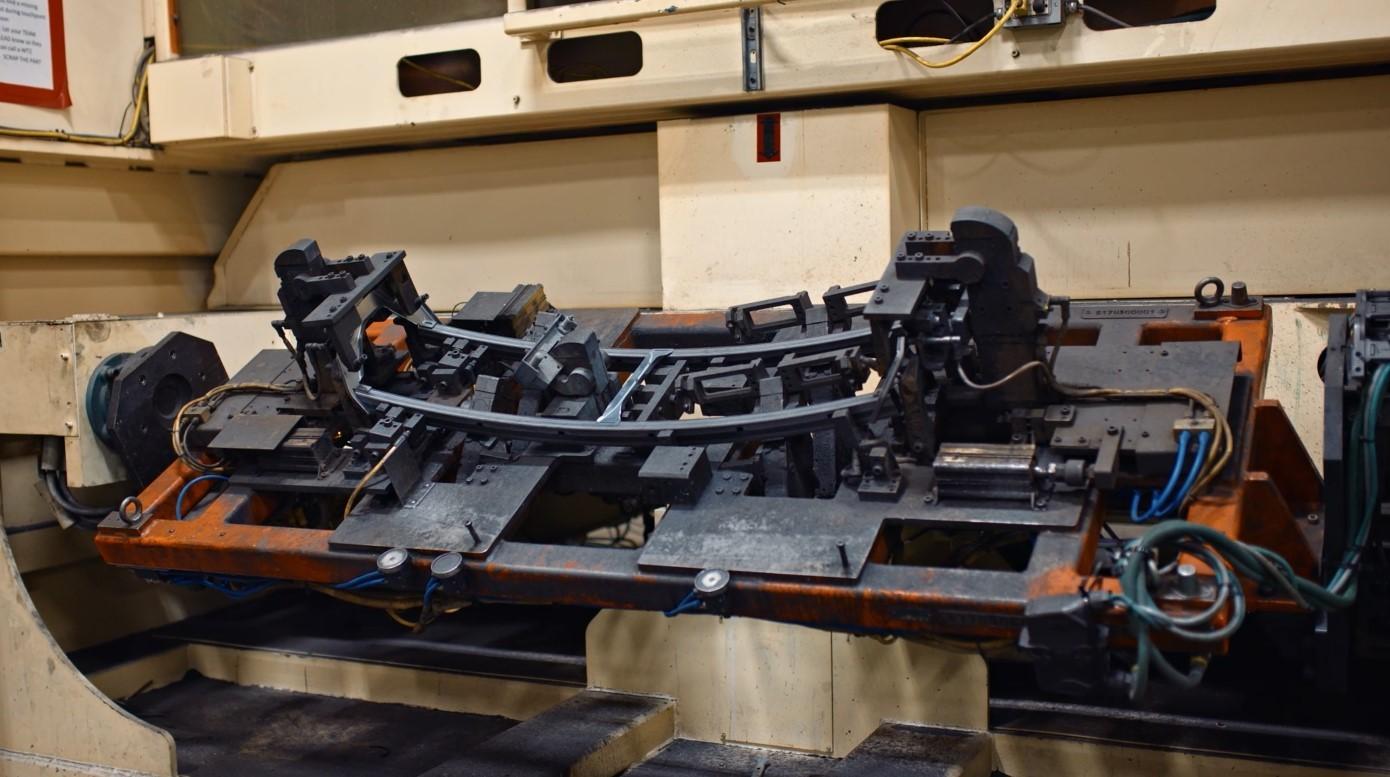
Types of welding fixtures
Welding fixtures can serve many purposes throughout the welding process, but their overall role is to secure workpieces. Examples include:
- Vise-jaw fixtures, with adjustable vise jaws that hold abnormally shaped workpieces in place.
- Clamping fixtures, which use welding fixture clamps to secure workpieces during welding.
- Rotational fixtures, which enable the rotation of cylindrical workpieces during welding.
- Indexing fixtures, which position workpieces at particular angles or positions for welding.
- Dedicated fixtures, designed for a specific welding operation or workpiece configuration.
- Modular fixtures, built from standardized components that can be assembled to support varying workpieces and welding requirements.
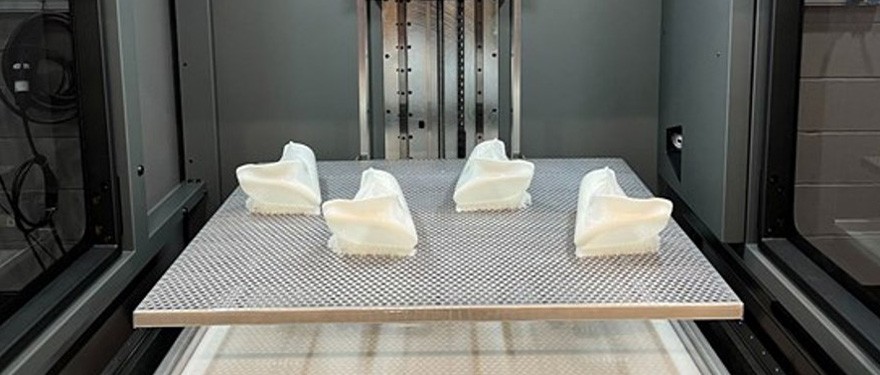
Welding fixtures that can be 3D printed
In terms of welding fixture automation, there are four main welding fixtures that can be additively manufactured.
MIG (Metal Inert Gas) welding fixtures help ensure accurate and efficient MIG welding. The fixture design positions and aligns workpieces and also supports the welding gun and wire feed throughout MIG welding operations. It is essential that MIG welding fixtures disperse heat correctly, and this affects the type of material used.
TIG (Tungsten Inert Gas) welding fixtures support exact positioning and alignment of workpieces during TIG welding. Fixture construction for TIG must allow for joint access, clearance, and customization. TIG welding requires increased accuracy to achieve high-quality results.
Laser welding fixtures hold and position workpieces throughout laser welding processes. Their role is to ensure proper alignment, stability, and accessibility for efficient and correct laser welding.
Spot welding fixtures hold and position workpieces during spot welding. In this process, two or more metal sheets are joined by applying pressure and heat at certain points.
Benefits of 3D printing welding fixtures
Additive manufacturing is more cost-effective than traditional methods because it removes the need for expensive tooling and machining. 3D printed fixture components for welding are more customizable, and that flexibility enables rapid prototyping and iteration. The fixture design can also be more intricate and complex, because additive manufacturing can achieve difficult geometries. These designs are also ergonomic and use lightweight materials. 3D printing significantly reduces time to market, because fixtures can be printed in-house. Producing parts on demand also eliminates the need to maintain a large inventory.
By using welding fixtures, workpieces can be properly oriented and aligned. That results in greater repeatability, accuracy, and consistency, and improves the overall welding process. Welding fixtures can be made by traditional methods or by additive manufacturing. With 3D printing, they can be customized and are cheaper and faster to produce.
Source: Stratasys. Photo: Stratasys.
Want to explore this application?
SEIDO Systems is Stratasys Platinum Partner across Benelux, France and the Nordics. Contact us for advice, a demo or a test print.