







SEIDO Systems has been a Stratasys partner in the Benelux for fifteen years
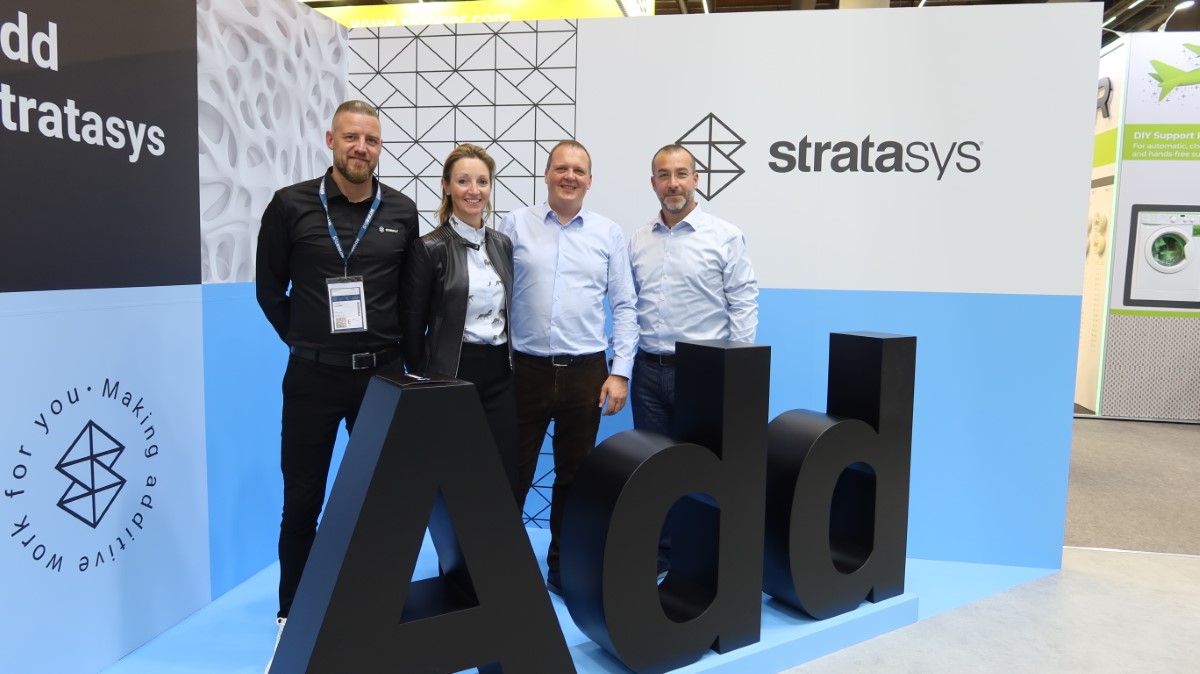
After fifteen years of collaboration in the field of 3D printing, Stratasys and SEIDO Systems want to take the step towards additive manufacturing in the Benelux. Print components serially. The technology is ready for this, says Stratasys EMEA President Andy Langfeld. What matters now is creating the right mindset. That is why partners such as SEIDO Systems play an important role in Stratasys' go-to-market strategy. “Local partners are close to the customer and develop the use case together with the customer.”
When Karl Wallecan drives back to Kortrijk from the European headquarters of Stratasys at the end of 2008, he has signed for three Stratasys uPrint machines, the compact FDM printer that has just been launched. Actually, he wanted to buy one FDM printer for his CNC milling and turning business; for 3D printing fixtures and molds. However, Stratasys wants to sell machines. That's how it is SEIDO Systems entered the 3D printing world fifteen years ago.
Important partners in go-to market strategy
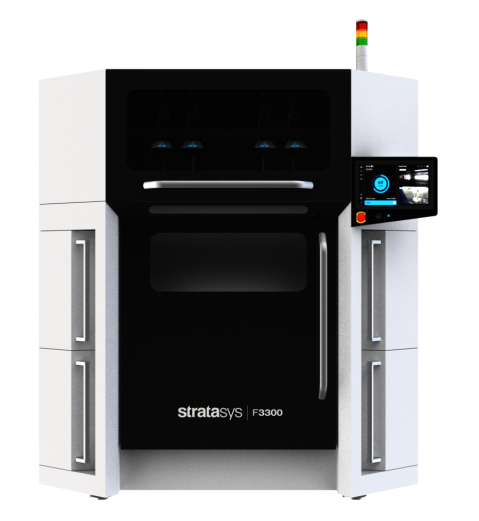
“The resellers are important partners for us. They are important in our go-to-market strategy. Our partners are close to the customer locally,” says Christian Alvarez, Chief Revenue Officer. They are the eyes and ears of Stratasys in the local markets. Stratasys uses the feedback they provide based on what they hear from customers in the product development of new machines, such as the F3300 launched on Formnext. This F3300 represents a whole new generation of industrial FDM printers, developed for series production. “Our partners have provided feedback on speed, yield, precision and cost per part. That's what it's all about if we want to make the step from prototyping to series production,” says Alvarez. For example, the F3300 is the first Stratasys 3D printer with four print heads that can be quickly changed. The SAF platform (powder bed) is also increasingly proving itself as a production platform. “We already have testimonials from service agencies that produce 24/7,” says Langfeld.
Toolbox of production company
Karl Wallecan, who comes from a family with roots in the mechanical engineering industry, saw the potential of 3D printing in addition to CNC machines. On that point, the manufacturing industry, or perhaps even better society, has gone wrong, he believes. “3D printing belongs in the toolbox of a production company. But it was wrong to think that you can replace all machining with 3D printing.” Andy Langfeld, President of Stratasys EMEA adds: “Many customers are looking for ways to replace their production line. However, you will never produce a million injection molded components with additive manufacturing.” But for smaller series, 3D printing is now a good alternative.
Mindset
Why haven't manufacturing companies taken this step after all these years? "Many companies can start tomorrow, but their fear of change is greater. 3D printing as a production technique is a matter of mindset, different design, different revenue models," says the European Stratasys CEO. If you start producing serially with 3D printing, a lot will change. He gives the example of the armrest of an airplane seat, which is traditionally composed of about 200 parts. Stratasys has the 3D printers and certified materials to print the armrest in five parts. “You make yourself less dependent on materials and supply chains. But you have to make the change possible yourself.” Andy Langfeld believes that companies should see much more of the opportunities of 3D printing in the life cycle of a product. He talks about a customer journey, in which printing takes place after the prototype phase to bring products to the market faster, while the production lines are being built up. Later, 3D printing will return to aftermarket applications, where expensive stocks of parts or molds are replaced by digital warehouses and 3D printers.
Scalable 3D printing is possible
The promise of 3D printing is great. Function integration, shorter supply chains with ditto lead times, weight savings, digitalization of spare parts stocks, and so on. Add sustainability to this in 2023, not only in the sense of more efficient material consumption but also fewer transport movements because you can produce on-demand and locally. Christian Alvarez thinks the manufacturing industry is at a tipping point. The adoption phase has begun. He points to Apple, which 3D prints the casing of a certain type of Apple Watch. “That is an example that scalable 3D printing is possible.” Of course, end parts have been printed for years. But according to him, real series production is only now getting underway. When it comes to mass production, different requirements apply. Speed, yield, accuracy, costs per product: a production manager sets the bar high in these areas. That is why Stratasys developed the F3300 platform with these aspects in mind. This does not mean that Stratasys no longer finds the prototyping market interesting. “We continue to work on that. We want to offer the right solution for the right use case; you need multiple platforms for that,” says Langfeld. “A product portfolio is therefore never ready.”
Software crucial
However, technology alone will not be enough to initiate the change, believes the Stratasys CRO. The technology must become more plug and play. Standardization in the workflow is also necessary. Stratasys has done this for the aerospace industry, for example, and can therefore demonstrate that 3D printing delivers consistent quality that meets the high requirements of the aviation industry. ISO standards are also embraced in the processes. And the group is currently working on a standardized calculation of the ecological footprint of a product. This will soon be a feature in Grabcad, the manufacturer's software platform. Fifteen years ago, when the collaboration between SEIDO Systems and Stratasys began, Stratasys was a hardware company with its own materials departments. Today, software bundled into GrabCad plays a key role. Andy Langfeld: “The software is the glue that connects everything.” The productivity gains required for mass production will partly have to come from a more efficient workflow. “Because every technology has limitations. We cannot make FDM a thousand times faster.”
Application, material, printing technology
Karl Wallecan thinks that many people underestimate the features that the software platform has. “If you want consistency, you have to invest in a software platform that connects all the steps. Just like with CNC turning and milling.” In his view, 3D printing is an interaction between material, application and technology. That is also the route he follows with customers. “We always start from the application, look for the appropriate material and then you end up with the right technology. That is why you need an ecosystem like Stratasys offers.”
Metal printing at Stratasys?
With Grabcad, five printing technologies and a wide range of materials, Stratasys has an ecosystem that offers a solution for many applications. Except when metal is needed; this is not possible. Five or six years ago, Stratasys was well advanced in developing a 3D metal printer. This route has been stopped. “We had to be honest with ourselves: we cannot deploy our R&D budget everywhere,” says Andy Langfeld about this decision. Plastics are the DNA of Stratasys. That is why the development of metal printing technology was stopped at the time. This year it wanted Stratasys management Desktop Metal take over, especially because of metal printing technology. Ultimately, the shareholders blocked the takeover. However, metal is high on the group's agenda, Andy Langfeld agrees. "We are gaining market share with our techniques. Then comes the next step and that could be metal. Customers are asking for it; they are looking for a partner who supports them with solutions in all materials."
The subcontracting nature of the Benelux industry is one of the reasons why the region is currently lagging behind in the step towards series production with 3D printing
Backlog in the Benelux
Has the industry in the Benelux and France accepted 3D printing as one of the tools in the toolbox? A few years ago, when it was mainly about 3D printing of tooling, the Benelux turned out to be innovative and led the way, says Andy Langfeld. Now when it comes to production, the market lags behind, for example, Germany, where 3D printing is already more accepted for spare parts. Karl Wallecan sees the main reason for this as the difference between the typical supply market in the Netherlands and Belgium and the OEM market in France, where many larger producers operate. For several years now, SEIDO Systems has also had a branch in France. There he sees OEMs investing heavily in Stratasys' high-quality 3D printers, such as the Fortus line. Andy Langfeld also thinks that the subcontracting nature of the BeNeLux Industry is one of the reasons why the region is currently lagging behind in the step towards series production with 3D printing. That's why he's happy that SEIDO Systems' sister company SEIDO Solutions offers 3D printing as a service. All five Stratasys printing technologies are available here for part production, even expanded with 3D metal printing that Stratasys does not yet offer.
Partners
SEIDO Systems is one of the Stratasys partners with the longest track record in Europe. In the coming years they will together develop business case after business case for customers with Stratasys technology as a starting point, whether it is FDM technology, powder bed printing with SAF technology or the high-speed DLP process of Origin or the SLA technology. “Our partners sell use cases to the customer, with materials and support. SEIDO Systems listens and understands the customer's problem and looks for a solution for it,” says Andy Langfeld. Karl Wallecan still remembers the first presentation he received from Stratasys about the uPrint. “It talked about one stop shop: 3D printer, materials and service. That is still what it is about today. That is why our focus is on Stratasys, so that we can properly support our customers.” With the step towards production with 3D printing, this becomes even more important, believes Christian Alvarez. “When it comes to production resources, customers buy on trust. The partner must be there 24/7.” SEIDO Systems does not push boxes, says Karl Wallecan. Not even after fifteen years.